Interview with a Madman: Frank Santo
The great White male millennial novel we've been waiting for
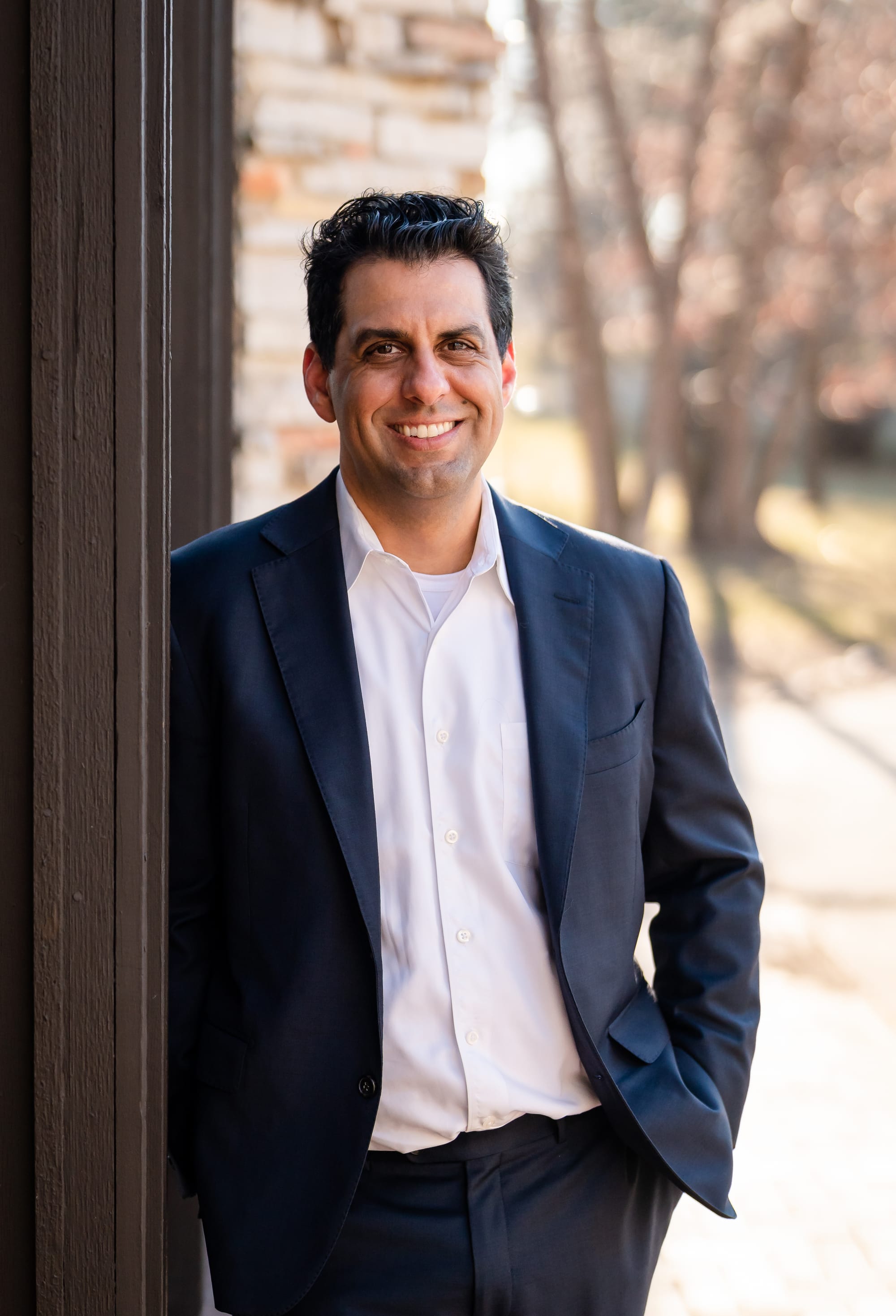

Last year a bunch of sad literary men were lamenting the lack of a great White male millennial novelist in modern-day publishing. The bad faith arguments suggested the books being published by Brown and Black savages had benefitted from DEI or identity politics or affirmative action or whatever tribal bullshit was hot at the time. Trust me, the discourse was even more pathetic than you can imagine.
Fast-forward to the present, however, and I have both wonderful and terrible news to report on this topic.
The wonderful news is this: I found the great White male millennial novel America's been waiting for. And better still, the author's a repressed Catholic Masshole who's as milquetoast as they come.
But here's the terrible news: This great White millennial novel has yet to be published, and Frank Santo, the great White millennial novelist who wrote it, is so obscure he makes me seem like a celebrity.
I met Frank via an email introduction from my main man Andrew Boryga, the author of Victim. Andrew told me Frank was looking to expand his literary network and was on the hunt for a new agent after his had recently retired. I said: "I'm a sociable sociopath; send him my way."
Me and Frank hopped on the telephone—as one of the last Gen-Xers I still fuck with the technology—and we instantly vibed. Frank told me about his current novel, which sounded hilarious. I asked him to send me the draft and told him if I enjoyed the work I'd cook up a blurb for his query letter.
A few days later, I was ripping through the draft and crying laughing. With apologies to the comedic geniuses Carl Hiaasen and Paul Beatty and Percival Everett, this was quite possibly the funniest book I'd ever read.
And I don't mean funny like: Oh, that's so delightfully clever. What mirth and merriment Frank has conjured.
I mean funny like: Jesus fucking Christ, I can't believe this crazy motherfucker wrote that shit!
The next day I enthusiastically supplied the following blurb for Frank's novel, which has the working title Husband of the Year, but which should undoubtedly be called The Cuckold:
"Wickedly funny and viciously sardonic, Frank Santo’s [THE CUCKOLD] rips off the millennial generation’s superficial façade and exposes an utterly depraved heart of darkness. This legit laugh out loud novel eviscerates performative masculinity, for-profit healthcare, and repressed suburban Massholes while posing a simple yet profound question: In present-day America, is it even possible to be an engaged father, a supportive husband, and a sane adult at the same time?"
I immediately put Frank in touch with my literary agent, who's evaluating the manuscript. And today, I'm thrilled to share my interview with the soon-to-be-hella famous author.
If you're a bloodsucking literary agent or a clueless editor at a Big Five imprint, pay attention. I've done the scouting for you, and the only thing left is for you to scoop up Frank's brutally hilarious novel and get the damn thing published.
So, without any further ado, please enjoy my deeply depraved conversation with Frank Santo, author of the twenty-first century's great White male millennial novel, The Cuckold.
CONTEXT
AG: What got you interested in the world of cuckoldry?
FS: Man, I feel like a defendant taking the stand. When I was writing this book it somehow never occurred to me that I’d have to answer questions like this. I thought I could just unleash an intensely graphic sex comedy on the unsuspecting public, no questions asked. But I guess it’s time to answer for my crimes.
I’m not sure I’m interested in cucks so much as the reaction people have to them. I spent ten years writing my first novel (The Birthparents, 2023, Tortoise Books), which was—in my view—an incisive, thoughtful, and nuanced examination of race, class, and privilege in America seen through the microcosm of the foster care system in NYC (where I used to work). I thought I was a modern-day Charles Dickens. I wanted to write something real, timely, urgent. I wanted to make a difference through the power of literature.
And after it finally came out, I’d go to bookstores around Boston, where I live, and do signings, which just means sitting in the corner of a Barnes and Noble and making sad-eyes at people in the hopes they’d come talk to me. Any small press writer is well-acquainted with this humiliating, lonely feeling. You just want to disappear. And whenever any of these people would, out of pity, come to my table and ask what my book was about, I’d always get this sort of polite, wincing smile in response to what I’d told them. This kindly but distancing nod, like: 'Oh wow, that sounds really important. Good for you, buddy.’ And then they’d walk to the Romantasy aisle and buy books about dragons sixty-nining (or whatever, I don’t know).
And so, I resolved that the next time I’d be sitting in a bookstore, feeling humiliated by the politeness of strangers, I'd want them to gasp when I told them what my book was about. I'd want them to slowly back away in horror. Because at least their reaction would be genuine. We would be engaged with one another—for better or for worse. With this book, at the very least, I'm positive no one is going to smile at me with pity and tell me my book sounds important. Upon reading this back it occurs to me that I might have a personality disorder.
AG: Just be honest, Frank: Did your wife cuck you out? Is this your revenge novel? Or—Oh Dear—perhaps you secretly want her to cuck you out, and writing this book is your extremely passive-aggressive way of asking her!
FS: No! I swear! Please believe me! I’m a manly man with a perfect marriage and irreproachable sexual tendencies!
There’s no way to answer without sounding defensive or horny, but the truth is my wife and I are about as conventional and monogamous of a couple as you’ll find. The main thing I drew from my real life in writing this book is my dogged and imperishable love for my wife, and that feeling that I’d do anything to make her happy, to maintain the life we’ve built together, both for our own sake and the sake of our three kids. That’s the central motivation of both the husband (Mark) and wife (Tasha) in The Cuckold—two people trying to hold as tightly as they can to the life they’ve built together, by whatever means necessary, making sacrifices and compromises they never thought they’d have to, and thereby becoming unrecognizable to themselves. We all have to do this at some point, in one arena of our lives or another. Luckily for me, unlike my protagonist, my list of sacrifices and compromises doesn’t happen to include watching my wife have sex with other people.
The main thing I drew from writing this book is my dogged and imperishable love for my wife.
AG: Okay, gags aside, we all know today’s men are in a world of hurt. A scary percentage of them feel "cucked out" psychologically, emotionally, and economically, and in some instances that thinking appears to manifest as a corporeal fantasy. What did you learn about the psychology of being a cuck while working on this novel?
FS: I listened to probably fifty hours of podcast interviews with men who are in open-marriages, a strong percentage of whom enthusiastically enjoy watching their wives have sex with other people, and then another fifty hours of women, or ‘vixens’ as they sometimes call themselves, discussing the same situation from their perspective—mostly during my commute, so apologies to any co-workers who might've noticed me appearing a little shaken during morning meetings. Anyway, in these interviews, most of the men said the same thing: That, while watching their wives with other people, they still felt that same intense feeling of jealousy most people would feel. The difference is, they like that intensity. It’s part of the appeal. For them, that sick, nauseous feeling which would make a normie like me want to scream or claw my eyes out or probably just quietly sit in the corner and weep, makes them feel more alive.
Now, plenty of these relationships (I’m sure) work just fine—so long as both the husband and the wife are equally enthusiastic. But in reality, I do wonder if sometimes the arrangement is purely consensual. Some wives might be doing this because their husbands are into it. Some men might be ‘into it’ because it’s what their wives want. And that’s the anxious, murky, unsavory space where I wanted this book to live. That’s the kind of psychic conflict the form of the novel is perfectly suited to explore.
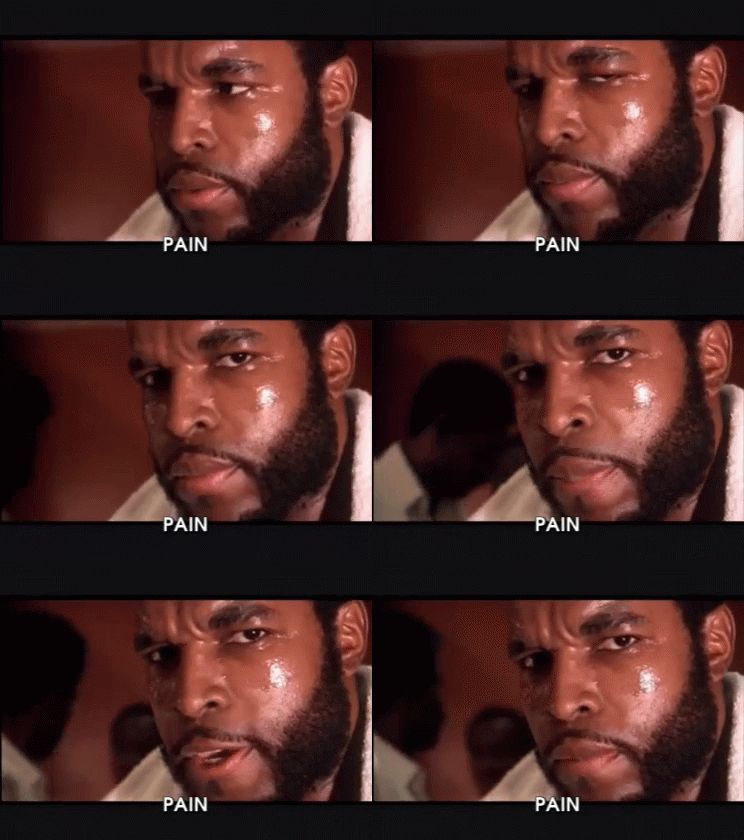
In my story, Mark and Tasha agree to open their stagnant marriage on the advice of their therapist. But by the time Mark—being a mediocre suburban family man—realizes he’s not going to be able to meet people as easily as his wife can on the open market, it’s too late to turn back. He’s already agreed to this. It was partly his idea. So the only way he can preserve his sanity, and thus their marriage, is to find a way to get some pleasure for himself out of his wife’s experiences. He has no choice but to turn into the skid. To find freedom in the pain. Control through the chaos. But that’s easier said than done.
AG: What books, movies, newsletters, podcasts, and the like did you consult to learn about cucks and their proclivities?
FS: The book that probably inspired me to write this more than any other was All Fours by Miranda July. It’s a good book—I admire and respect it greatly despite sort of hating it. In that book, the woman main character more or less forces her husband into an open-marriage so she can pursue self-actualization via sexual exploration. And the husband character isn’t really treated as a human. He just kind of goes along with it, and we don’t learn much about his reaction. I think that narrative choice works in All Fours—because it’s the story of the wife coping with pre-menopause, and her lack of interest in the emotional fallout of her decisions is partly the point. But I started to think: What would that be like as a man? What kind of choices would that force you into? What kind of mental compromises would you have to make to preserve your own image of yourself?
My first instinct then was to find real people I could interview. As I said, I live a pretty conventional life in suburban Massachusetts, a place which must be in the running for the most uptight, conformist places in the country. And yet, you’d be surprised how easy it was to find people in this lifestyle, just through friends of friends. I conducted about five interviews, with men and women, but in all honesty, I don’t think they were all that illuminating. People were surprisingly eager to tell me about the sex part—the orgies, the sex clubs, the complexities involved in the scheduling of threesomes—but those details were only so interesting to me.
When I asked questions about the psychology behind it, or specific questions about their relationships, I could feel them bristle. Talking about the graphic details of their sex lives with a complete stranger was totally fine. But asking about their emotions was too intimate. It felt like a violation. And the last thing I wanted to do was come off as judgmental, or make anyone feel bad about either their lifestyle or their relationship. Plus, I don’t blame them for their hesitance, because the reason I was coming off as judgmental was because I am judgmental. Everyone is. To be human is to judge. It’s what separates us from AI. And, it’s half the fun of reading novels, isn’t it? To judge the behavior and values of other people under the guise of intellectual edification.
In addition to learning about open-marriages and other alternative sexual arrangements, I also had to learn how to write sex scenes, which is just technically really difficult. You never want to be the guy waxing on about throbbing members or quivering blossoms (vaginas, I think). To do this, I read some of the classics in transgressive erotic literature: Emmanuelle, The Story of O—super rapey, Jesus Christ!—Our Lady of the Flowers by Jean Genet, and Justine by Marquis De Sade, to name a few. I wanted to understand the literary tradition I was drawing from. I also found this website, The Bad Sex in Fiction Award, which awards the worst sex writing published in literary fiction each year. It’s hilarious. A common foible I noticed is overly ornate and often confusing metaphors used to describe the act of sex. Also, best to avoid puns.
If anyone is interested in a recommendation, the most enjoyable erotic novel I came across in my research was Vox by Nicholson Baker. Holy shit can that guy write! Just a delight from start to finish. He makes sexuality into this beautiful, life-affirming, joyous thing that is completely foreign to me as a Catholic from Massachusetts. My book is a lot more shame-forward.
You never want to be the guy waxing on about throbbing members or quivering blossoms.
AG: What did you encounter that surprised you or changed your perspective?
FS: I’ve been surprised by how excited this topic makes people. Recently, I was invited to join a book club of fifteen-odd women over 65 to talk about my first novel, The Birthparents. It was a great time. Wonderful ladies. Scintillating discourse. Fantastic cheese spread. Shoutouts to Ann Marie, Karen and Deb!
After we’d all had like three glasses of wine the group asked me what I was working on next. Now normally, when other people around town, or my co-workers, or parents of my children’s friends ask me this question, I just say something vague and quickly change the subject. But this night, I was kind of feeling myself, so I told them all about it. And let me tell you, these ladies were electrified. I stayed another two hours talking with them about all the swingers they’d known, both back in the seventies and now. The different communes they’d been aware of. Couples they’d all known who were ‘Up to something, that’s for sure.’ Anyway, the point is: These dignified, accomplished women could not have been more excited about my extremely graphic sex book.
These dignified, accomplished women could not have been more excited about my extremely graphic sex book.
AG: A significant percentage of online pornography focuses on cuckold fantasies (or nightmares), which indicates there’s demand for this type of material, even among non-practicing cucks. What do you make of this observation? And did this dynamic influence the drafting of the book?
FS: As [heteronormative] men, much of our self-image is about being strong, about coming out on top, about being a winner. But most of us, not even that deep down, know we aren’t really. We know we’re a joke. Getting cucked is like the universe exposing you for the scared, helpless little boy you are. But what if you like it? What if you love it? Then you’re untouchable, thinks the cuck. Invincible. Free.
This is a novel about making the best of a bad situation. About dancing on the deck while the ship sinks beneath the Arctic. Both Mark and Tasha are stuck in the grind of life, caring for a sick child, aging parents, working jobs they dislike, all while slowly falling out of love with the one person they rely on most. But they are good people—neither of them is going to walk away and leave the other holding the bag. I’ve gone into Mark’s psychology already, but Tasha’s is just as interesting. She’s tried everything to make their marriage work, but the reality is she’s stuck with a dude who has forgotten how to love her for who she is rather than for the role she plays in his life. Now she just wants to feel some happiness and freedom during the one life she has on this Earth. To be loved the way she deserves to be loved, without having to hurt Mark or her children. If the wild success of novels like All Fours is any indication, plenty of women fantasize about the kind of freedom Tasha seeks for herself in my novel. I’m just telling the story from a male perspective—mostly because no woman wants to read sex scenes written by a guy named Frank who's pretending to be a girl.
Getting cucked is like the universe exposing you for the scared, helpless little boy you are.
CRAFT
AG: When the novel begins, your protagonist, Mark, is in his mid-thirties and is engulfed in the throes of middle-aged malaise: His marriage is stale, his precocious daughter’s growing up too fast, his sensitive son’s recovering from a serious health scare, and his macho dad is grappling with early signs of dementia. Again, is this novel an obvious cry for help? Or are Mark’s circumstances an examination of the impossible constraints imposed on millennials like yourself?
FS: If there was one trait that defined millennials in our twenties it was blind optimism. We all believed we were going to make the world a better place. We got Obama elected! We were young and cool and ready to help out! But now we’re getting old. The world is the same, and we’ve got no choice but to admit that all the optimism we thought defined us was probably just the result of some marketing campaign devised by tech lizard people to get us to hand over our data. Now that we realize we’re not special, it’s time to grapple with the same issues that every generation before us has grappled with: dashed dreams, failed romance, sickness, death, and how to be a good person even when it’s not in our best interest. I swear to God, this book is a laugh riot.
AG: When Mark agrees to his wife’s proposal to begin an “open marriage,” his wife Tasha has considerably more success finding partners, and Mark soon finds himself spiraling at home and at work. Is this a common phenomenon in the open marriage marketplace? Or was the one-sided nature of their arrangement something you created for narrative effect?
FS: I read a lot of testimonials from men who believed that opening their marriage meant they'd start getting laid all the time. Like they were Mick Jagger or something. But then, of course, they realize: Who wants to sleep with some regular-ass middle-aged married guy? Not me! On the other hand, for obvious reasons, women tend to have a much easier time meeting new partners. I ascertained that such a situation would be ripe for comedy.
AG: Eventually, Mark gets into the cuckold game, too, where he encounters some remarkably depraved people. I wouldn’t dare spoil any of the set pieces, but 1) how did you come up with these lunatics, and 2) how did you get into the right state of mind to craft the novel’s most debauched sex scenes?
FS: As a Catholic boy from Massachusetts, writing about sex makes me both deeply uncomfortable and ashamed. But, as they say, ‘a story is a promise’—and if you’re the reader and you pick up a book about a couple exploring their sexuality, you’re going to feel ripped off if the writer skimps on the sex scenes. Every time I’d feel myself pulling punches, or shying away from the more visceral aspects of sex, I’d recall those quiet afternoons in Barnes and Noble, when I was trying to convince polite strangers to buy my responsible and thoughtful Great American Novel, and think: What could I write that would give this person a jolt? How could I replace their kind and well-intentioned but meretricious smile with something real? Somewhere in that process, my favorite character in the book, Dr. Roger Nelson, the unhinged, avuncular humanitarian Sex God—the Cuck King of Massachusetts—emerged from the recesses of my addled mind and introduced himself. We hit it off immediately.
To answer the second part of the question, I’ll refer you to David Bowie, my favorite musician of all time. He said:
“If you feel safe in the area you’re working in, you’re not working in the right area. Always go a little further into the water than you feel you’re capable of being in. Go a little bit out of your depth. And when you don’t feel that your feet are quite touching the bottom, you’re just about in the right place to do something exciting.”
This quote has always been my guiding philosophy for writing. I’m a privileged White boy from Massachusetts and my first novel was about race and class in the South Bronx. I’m a sexually repressed semi-Catholic family man and my second novel is about debauchery and degradation. The only way I know how to write is to make myself uncomfortable. It’s also how I know I’ve hit my target. I’m not sure this approach is wise or is working out for me professionally—at all. I should probably write something more likely to sell. Like a murder mystery set in World War Two. Or a Romantasy full of interspecies boning.
The only way I know how to write is to make myself uncomfortable.
AG: As an author who loves to napalm neoliberalism, I quite enjoyed the novel’s B-plot, which revolves around Mark’s job as a nihilistic financial analyst for a private equity-owned hospital system. Even though Mark’s personal life is devolving into cuckold-inspired madness, at work he becomes increasingly ruthless—and effective. What were you trying to achieve, both narratively and thematically, with this juxtaposition?
FS: This is a comedy, but Mark is fundamentally a tragic hero, trying his best to take control of a situation that, deep down, he knows will undo him. In his work, like his personal life, he knows he can either resist for the sake of moral purity, or he can try and make the situation work for him. We all want to stay true to ourselves and our ideals, but in a profits and losses world, when we’ve all got mouths to feed, sometimes you have to lose yourself just to get by. To provide for the people who rely on you. Whether the cost to your soul is worth it or not sometimes feels like an irrelevant question: In cuckoldry and capitalism, sometimes you just gotta do what you gotta do.
In cuckoldry and capitalism, sometimes you just gotta do what you gotta do.
CONCLUSIONS
AG: Is being a cuck the problem or the solution to society’s problems?
FS: Yes.
AG: Aren’t we all, in our own way, secretly getting cucked out by someone?
FS: It’s not even secret anymore. They’re telling us what they’re doing. And some of us, like Mark, are finding a way to LOVE it.

Support Your Favorite Cuck Whisperer!
Frank is a great dude and a fantastic writer—show him some love by following him on CuckStack and Cuckstagram and by buying his first published novel, The Birthparents.
If you're a literary agent or editor and want to save your industry, be smart and request The Cuckold for review. You won't be sorry.