Junk Food for the Soul
On the vacuousness of social media
I often wonder if I simply don't "get" social media. Or if I'm not being open-minded enough to give the material a chance. Or if perhaps I've gotten too old to understand young people and connect to the cultural zeitgeist.
But none of those hypotheses feel quite right.
Yes I'm in the throes of middle-aged malaise, but I'm not that old. And I'm not that lame, either. To be honest, I'm a pretty interesting guy—with an innate curiosity and good taste—and I understand, appreciate, and embrace the fact that human culture is constantly evolving.
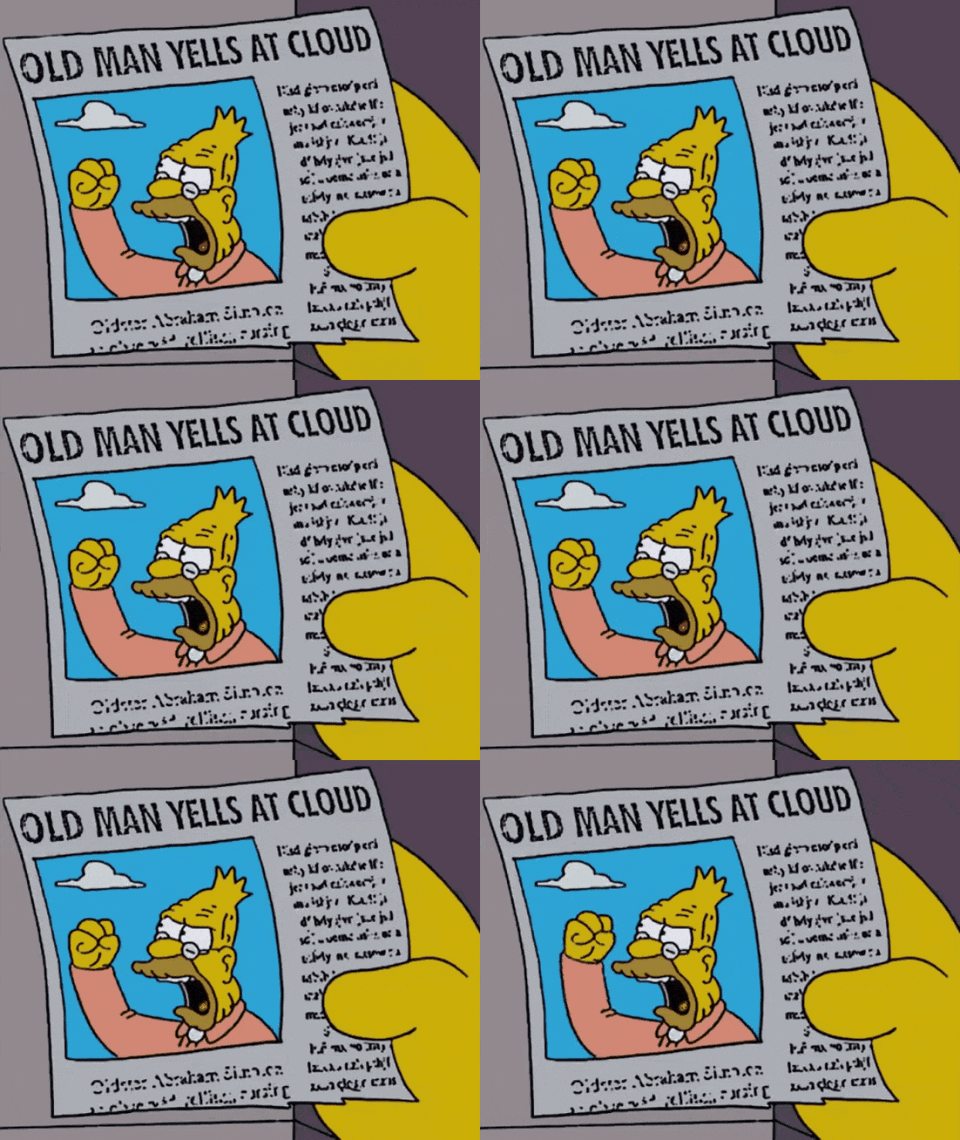
Change is good. In biology, change equals life, whereas equilibrium means death. As such, you won't find me yelling at clouds, romanticizing the "good old days," or lamenting the inscrutable behavior of the "kids these days" (much).
And yet, when I engage with social media content, I can't help but feel, at worst, anger and frustration, and, at best, apathy and indifference.
When an influencer photo reveals stacks upon stacks of amazing books, the skeptic in my brain wonders: Did you actually read all those? Or are you just fronting for the masses?
When a way-too-close shot of some rando's face blankets my phone screen, my first instinct is to recoil in horror and shout: Bruh—give me some goddamned space!
When an influencer films a video with their phone lying on a car dashboard, or dangling from the squat rack in their gym, or sitting opposite the McDonald's booth where they're jamming Chicken McNuggets into their face, I ask: Who TF am I supposed to be in this nonsensical scene?
When I'm subjected to videos of superimposed torsos on grainy, low-grade green screens, I wonder: What in the actual fuck am I looking at? While ruing the fact that I'm not rewatching Predator, Hard Target, or The Road Warrior instead.

So then I wonder if maybe I haven't trained my algorithm properly. Or if maybe there's a mountain of incredible material just waiting to be discovered. Or if maybe I just need to look harder to find the good stuff.
But here's the thing: There is no good stuff.
Even the consensus "best" content I've consumed on these social media platforms—municipal drains being unclogged, unkempt lawns being landscaped, baby red pandas being adorable—is extremely vacuous and surreptitiously harmful.
In sum, the real reason I hate social media content is actually quite simple: It fucking sucks.
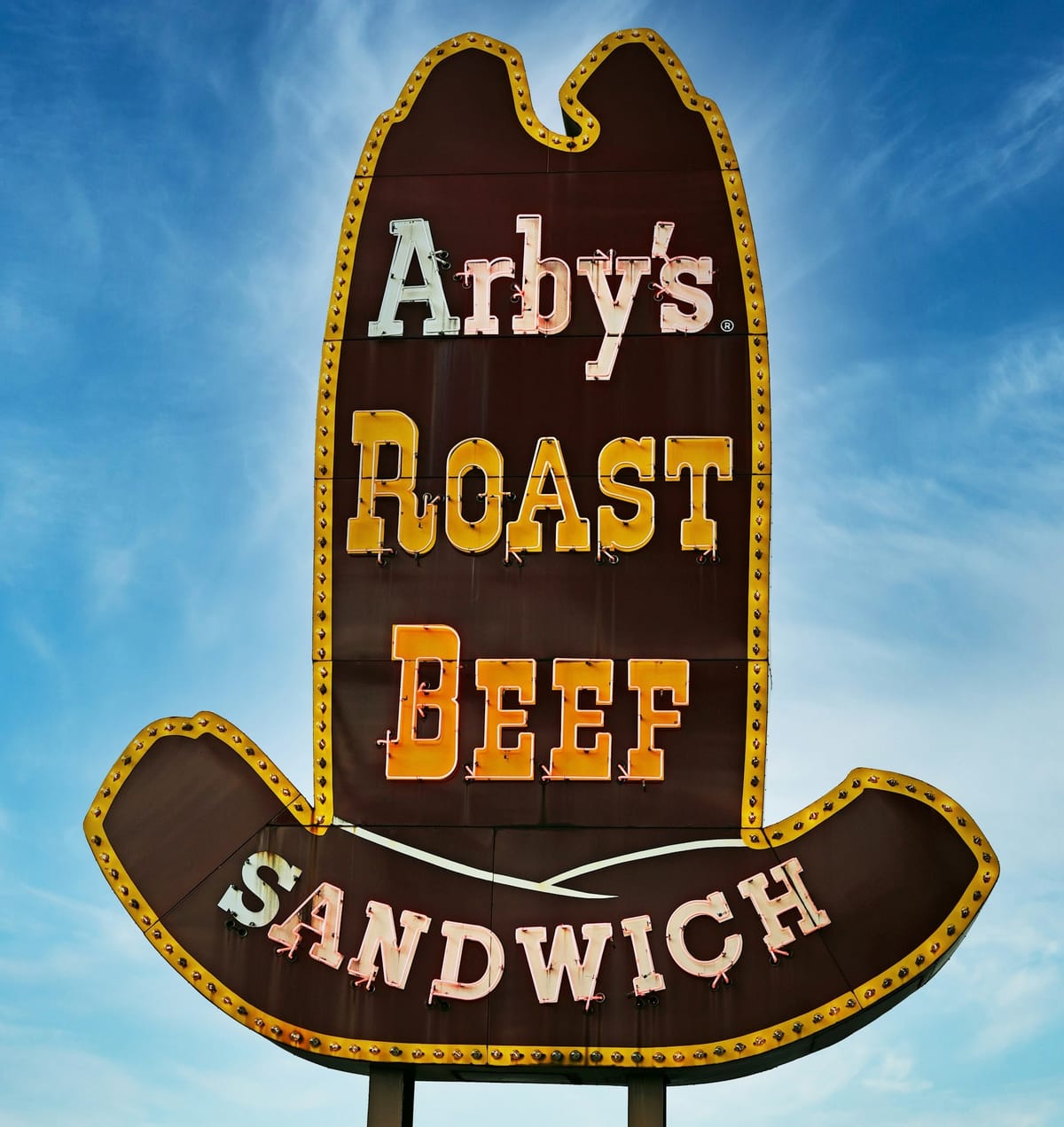
Content is to Art What Arby's is to Food
Devouring a Half Pound Beef 'N Cheddar with Curly Fries and chasing those with a Jamocha Shake will activate just about every pleasure center in your brain. But later on, once the short-term dopamine rush has dissipated, your body will have to contend with the unnatural aftermath.
Poison yourself like that once per month, and you might be okay. But poison yourself like that each and every day, and you'll soon be afflicted with a host of health problems and heading for an early grave.
An analogous problem plagues every single social media platform. By design, they're loaded with addictive, toxic, heavily processed junk food for your brain, and each time you log on you're forced to eat. The first few morsels might taste yummy, but continue to binge and you'll end up with no attention span, an incurable case of brain rot, and an LLM for a spouse.

While I concede this isn't a new or particularly illuminating diatribe, the core thesis bears repeating as often as possible. But what's perhaps less well-articulated, though equally impactful, is how devastating the opportunity cost of wasting your precious life on social media can be. Each moment you spend consuming low-quality "content" is a moment you're not consuming high-quality "art."
That may sound hoity-toity, but art is how we unsophisticated little monkeys learn from and connect with each other.
We write novels and stage plays and compose music and produce movies to interrogate what it means to be human. To make sense of the world around us. And to examine complex, amorphous ideas such as morality, power, ambition, corruption, and justice.
We go to theaters, concerts, cinemas, symphonies, galleries, and the like so we can engage with and appreciate art in communal spaces. Where we can have transcendent experiences that are made even more resonant because they create lasting bonds between us.
At our core, we're a social, storytelling species, and art—not content—is our foundational mode of expression.
Silicon Valley's False Promises
When social media platforms first emerged, their feckless founders promised us meaningful conversations, limitless connections, and much, much more. In actuality, over the past fifteen years, all they've done is create a perverse incentive system which encourages "users" (e.g., addicts) to create the dumbest, least interesting, most vapid shit imaginable.
Meanwhile, in the background, those very same platforms have been harvesting our invaluable user data, selling that data to corporate brand managers, bombarding us with targeted ads, and lining the pockets of their shareholders—and founders—to the tune of hundreds of billions of dollars.

We're now more than two decades into the social media era and I keep waiting for the societal fever to break. Waiting for everyone to wake up one day and collectively say: "Wow, this shit blows—I'm going outside." Waiting for that glorious reverse network effect to take hold so we can all watch Meta's stock plummet 96%.
But perhaps none of those things will come to pass. Perhaps the future of online content will be as unrecognizable and baffling to today's young netizens as the appeal of TikToks and Reels are to me. Perhaps nuance and complexity and substance will become artifacts of a bygone era. Perhaps authentic art will fully succumb to viral content.
I hope not.
Because no matter how old and out of touch I may be or may become, I can promise you this: If we continue to sacrifice art for the benefit of content, we're all going to end up worse off.