One-Sided Conversations with Unmedicated First Graders
A field trip which will live in infamy

8:52 a.m.
I depart my decaying condo and I’m greeted by endless blue sky, warm sun, and crisp spring air. Good vibes abound. It’s gonna be a great day, and I’m gonna have a great time.
8:57 a.m.
The school foyer teems with cacophonous first graders. They yell and shout and push and twirl and fidget and squirm. I survey the scene and the hair on the back of my neck stands up and my survival instinct screams “flight.”
I take a deep breath and steel myself. The manic atmosphere reminds me of every prison movie I’ve ever seen. The inmates are riled up and raring for violence and the levee’s about to break.
9:03 a.m.
We commence the procession of the unhinged.
A dozen adults (five teachers, seven parents) are expected to escort sixty-odd children to the Lincoln Park Zoo, and nobody’s supposed to die. My daughter’s class, led by Miss S., exits the school first and spills onto the sidewalk. They’re barely corralled by the already shellshocked adults.
Miss S. tells the children to form two lines.
I ask the assistant teacher — the one I’ve determined to be the class enforcer — how I can be most helpful. She doesn’t tell me to travel back in time ten years and get a vasectomy — the correct answer — but instead suggests I take point.
My daughter excitedly assumes the position of line leader, while a pack of feral boys jockey for position around her, continuously breaking formation.
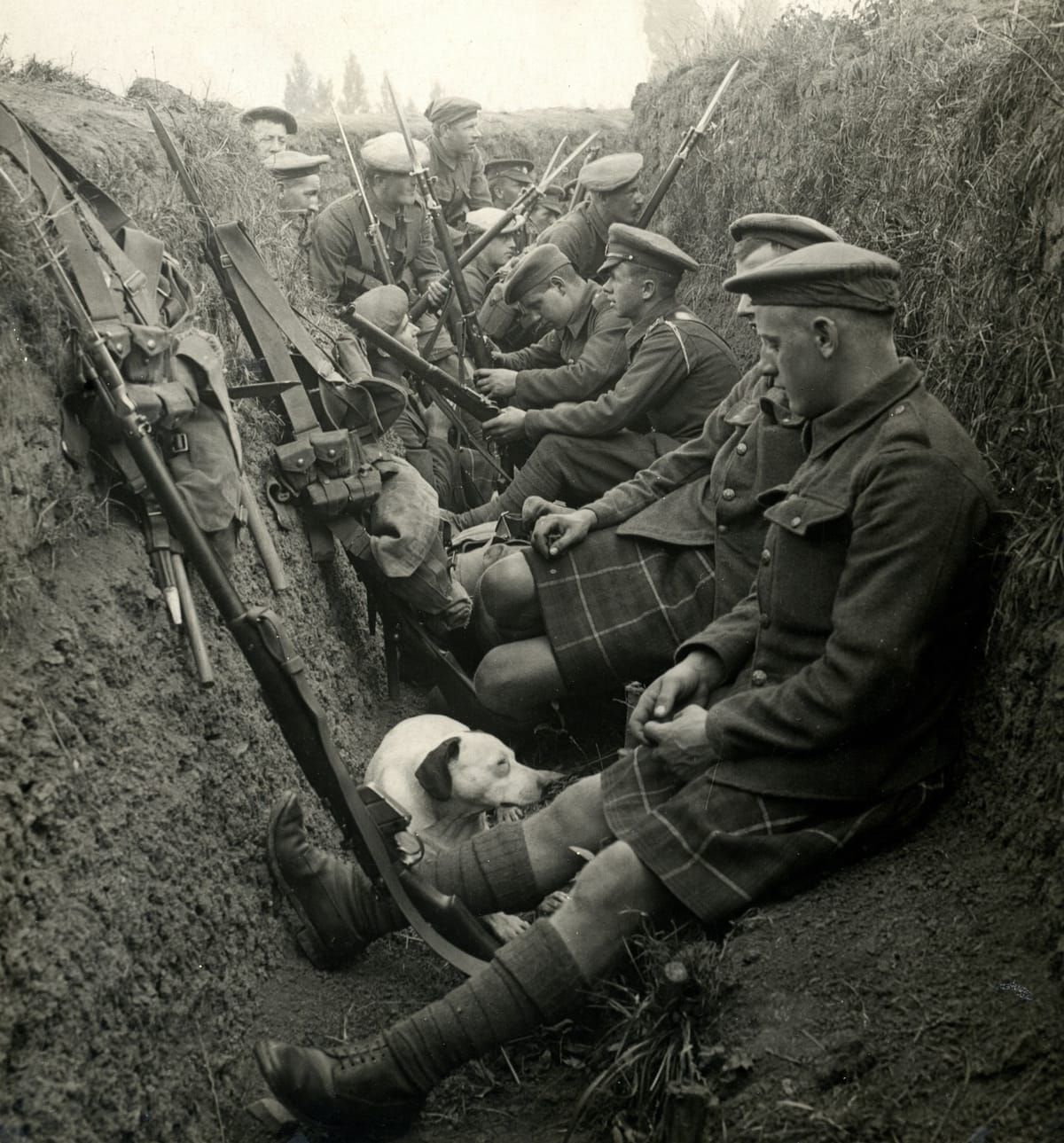
These youngsters don’t yet realize the first ones to leave their trench, or foxhole, or landing craft, are the first ones to get killed.
9:06 a.m.
After traversing twenty excruciating meters we reach the first major intersection. One of the boys up front, who simply can’t fathom the concept of an inside voice, says, “THAT’S MY HOUSE! THAT’S MY DAD’S HOUSE! MY DAD LIVES THERE!”
Reconciling his statements makes me sad. I point and say, “Wow. Our house is right over there, which means we’re neighbors.”
“I DIDN’T KNOW WE WERE NEIGHBORS!”
I immediately regret divulging this information.
9:09 a.m.
We reach the second intersection, opposite my decaying condo and adjacent to a Catholic church. On Friday mornings the church provides meals to indigent members of the community, which means a queue has formed, and our desired path is blocked.
We stop and wait for the rest of the children to catch up. Inexplicably, some are still crossing the first intersection.
A rambunctious boy up front, who can use an inside voice, but who apparently risks death if he stops moving, asks, “If you’re a grown up, why are you so little?”
The question rattles me. I’m short (5’8”), but I’m not a Shire hobbit. Also, given my stocky build, deep voice, threatening melanin level, and macho douchebag schtick, most adults think I’m taller than I actually am.
None of that’s relevant. First graders call it like it is. I have no appropriate (or legal) recourse, so I say, “Well, everyone’s body is different, and this is just how mine is.” He nods. I encourage him to stay still and get back in line. He declines.
9:11 a.m.
We cross the street and miraculously suffer zero fatalities.
Despite repeated protestations and excoriations from Miss S., the heathens up front insist on walking ahead of me. After three infractions in ten seconds, Miss S. stops the procession, threatens to turn everyone around, head back to the classroom, and cancel the entire field trip.

The hollow ploy works. The boys walk parallel to me. Four abreast.
Apropos of nothing, my newfound neighbor asks if I know about ““[INDECIPHERABLE] GUTS!” and wants to know if I’ve ever seen “[INDECIPHERABLE] GUTS!”
“What kind of guts?” I ask.
“[INDECIPHERABLE] GUTS!”
“Bug guts?”
“NO! [INDECIPHERABLE] GUTS!”
“Bald guts?”
“YES! BALD GUTS!”
“What are bald guts?”
“BALD GUTS! LIKE INSIDE YOUR BODY!”
“I don’t think bald is the right word to describe guts. Where’d you hear that?”
“I KILLED A SQUIRREL ONCE! WITH MY BARE HANDS!”
9:17 a.m.
We escape a major intersection and notorious wind tunnel unharmed, then descend a ramp into a large public green space. I feel a tinge of relief, as we’re now walking the safest possible path.
Once we clear the tunnel there’s only one major intersection left. We may survive yet.
9:18 a.m.
Halfway through the tunnel I realize I’ve made an egregious error. Every. single. child. screams at the top of their lungs, producing the loudest, most painful sound I’ve ever encountered.

9:28 a.m.
We arrive at the entrance to the Lincoln Park Zoo and the longest twenty-five minutes of my life come to an end.
Before we enter, however, we have to take a class photo. My daughter hates having her picture taken and stares at the adoring parents like a Uyghur in a Xinjiang reeducation camp. I don’t participate in the photoshoot, preferring instead to pretend this day never happened.
9:34 a.m.
Standing outside the entrance I’m not quite sure what we’re waiting for. The sooner these savages get inside, the sooner I can visit the reptile and bird houses.
Miss S. calls for order using her patented battle cry: “One, two, three, eyes on me.”
The children respond like miniature fascists: “ONE, TWO, EYES ON YOU!”
Miss S. then instructs each child to find their parent chaperone for the day. Apparently we’re breaking up into small groups, which is news to me.
Miss S. reads the names of the four children in my cohort. My daughter receives home-parent advantage, and will be accompanied by the boy who called me a hobbit, another boy I’ve never met — but who will obviously be unhinged — and the youngest daughter of a woman I went to high school with.
Said woman I went to high school with is a doctor, and said woman I went to high school with’s youngest daughter is disgustingly polite and offensively courteous.
I write unpublishable novels and an offensive blog and my daughter condescends to me like I’m an invalid.
“We’ll meet for lunch at eleven-thirty,” Miss S. says. She gives all the parents her phone number. In case of an emergency.
9:39 a.m.
We enter the zoo and visit the seal exhibit because it’s immediately in front of us. I ask the children what animals they’d like to see and each provides a different answer.
Eventually two confirm they want to see the lions.
“Everyone wants to see the lions,” I say. “If we go to the far side of the zoo first, we’ll cover more ground, and avoid the crowds.”
“I want to see the lions,” the boy who called me a hobbit says.
“Zigging while everyone else zags is a great life lesson,” I explain.
“I want to see the lions,” my daughter says. Betrayal is the cruelest sin.
We head to the lion exhibit.
They’re not on display.
9:46 a.m.
“I want a snack,” the well-behaved girl says.
“We just got here,” I say. “How about we check out the reptile house?”
We head to the reptile house.
It doesn’t open until ten.
“I want a snack,” the well-behaved girl says.
“Why don’t we see if the snow leopard’s out?” I say.
We double-back to the snow leopard exhibit.
She’s not on display.
“I want a snack,” the well-behaved girl says.
“Does anyone else want a snack?” I ask.

9:52 a.m.
We sit on park benches across from the snow leopard exhibit and crack open our snacks. I double- and triple-check for allergies. The boy who called me a hobbit packed a bag of raw vegetables, which — to my shock and disbelief — he willingly eats. The well-behaved girl opens a bag of Flamin’ Hot Cheetos. My daughter munches on grapes and Costco-branded fig newtons.
The other boy doesn’t have a snack, which bums me out, so I give him my Costco-branded fig newtons. He eats one, fondles and molests the other for several minutes, then says he’s full. I recently got my hepatitis A booster, so I eat it.
Every kid who walks by asks their chaperone why my daughter’s cohort is eating a snack. A mom who’s close with my wife caves and tells her group to take a break as well.
Strength in numbers.
10:04 a.m.
The ten of us roll into the reptile house. The exhibit also includes nocturnal mammals such as bats, bettongs, mice, and mongooses and is therefore pitch black. The eight future leaders of America run inside and disappear into the darkness. The other mom panics and worries we’ll lose a kid.
“Only the strong survive,” I say.
10:13 a.m.
We emerge from the shadows intact and make our way through the sunlit portion of the exhibit, which features a pygmy caiman, Jamaican iguanas, and poison dart frogs, among other tropical creatures.
The mom and I agree we should leverage our economies of scale and ride out the rest of the storm together.
My group exits the reptile house and walks toward the flamingos. I wave to the other mom but she doesn’t notice. I call her cellphone but she doesn’t answer. I watch helplessly as she saunters in the opposite direction.
10:24 a.m.
I tell my group we should visit the monkey house. In return, I receive two requests to see the lions, one to see the wolves, and one to see the elephants.
“This zoo doesn’t have elephants,” I say. “The monkey house is on the way to the lions. We’ll stop there first.”
By now the zoo is packed with locals, tourists, and kids on field trips from every corner of the goddamned city.
We joylessly push through the crush of people at the monkey exhibit then make our way back to the lion’s den and joylessly push through the crush of people there. This time the big cats are on display. The kids “ooh” and “ahh” at the freshly born cubs and gasp when they see the adolescent male chewing on somebody’s former rib cage.
We take a potty break just before disaster strikes. Small victories.

10:34 a.m.
I promised the boy who didn’t call me a hobbit we could see the wolves next, so we make our way back to the entrance, past the seals, and into the part of the zoo containing North American mammals.
We’ve spent an hour walking in a circle.
The wolf exhibit is closed to protect the black-crowned night herons, who migrate to Chicago every summer to nest in the surrounding trees.
They’re quite amazing to behold, but the boy who didn’t call me a hobbit doesn’t care and is clearly distressed. Something about his demeanor makes me incredibly sad. Perhaps he reminds me of myself.
The temperature has risen and the kids are frustrated and disinterested and somehow we’ve got to survive another three hours together.
I call an audible and suggest we hit the indoor play space. Four out of four unmedicated first graders agree.
Forty-two glorious minutes pass.
The kids — including my daughter — have a goddamned blast running and jumping and climbing. I admire the turtles and soak in the sunshine and read The Financial Times on my phone.
When I tell them it’s time for lunch they’re practically euphoric.
11:21 a.m.
We arrive at the designated lunch sector and several chaperones and children have already set up camp. Bodies adorn the ground like the aftermath of the Battle of Hastings.
I sit next to a chaperone friend and she asks how it’s going.
“This is a once in a lifetime experience,” I say.
“Because you’ll never do it again?”

The adults sit and commiserate while the children play. The girls host an imaginary tea party and examine nature. The boys hit each other with sticks. Gender stereotypes die hard.
I tell Miss S. about our secret excursion to the indoor play space and she wants to replicate our success. She tells all the parents to rendezvous there after lunch.
12:11 p.m.
Sixty-odd first graders enter the play space ready for combat. But there’s a problem: all the other kids, on all the other field trips, from every other corner of the goddamned city are there too.
Roughly two hundred kids crowd into the play space. It’s undoubtedly a fire hazard, and more tragically a microcosm of structural inequity and racial segregation in the city of Chicago. Our Northside school is comprised mostly of Whites and Asians. The Southside schools are entirely Black. The Westside schools are entirely Hispanic.
First graders don’t dwell on the disasters created by their forebears. They just want to play. So they charge into battle.
Within minutes the casualty rate spikes. Heads get bumped. Limbs get twisted. Bodies get trampled.
One of the assistant teachers runs over to Miss S. and says, “We’ve got to go! Kids are getting hurt!”

Miss S. orders a tactical retreat. Teachers and parents pull the wounded from the fray.
No child’s left behind.
12:24 p.m.
We exit the zoo for what I hope will be the final, long, arduous slog home. But Miss S. doesn’t want to be back in her classroom any more than I want to be on this field trip.
She calls an audible, and both classes make a beeline for the playground across the street. Given a choice, I’d opt for a full minute of waterboarding.
At the entrance one of the assistant teachers reminds Miss S. about the perils of the pathogen-filled sandbox.
“Okay friends, listen up. Do NOT go in the sandbox,” Miss S. tells her students. “Where are we not going?”
“THE SANDBOX!”
As the biggest kid on the playground I traverse the rope bridge, hang upside down from the monkey bars, scale the climbing wall, and use the equipment in explicitly forbidden ways.
My right knee’s down half a meniscus, but I learn everything the hard way. More importantly, my daughter and her friends love it. I’m the fun dad. The one who risks his fragile, decomposing body for their attention and amusement.
1:16 p.m.
Everyone’s still alive, and I only had to intervene during one playground assault.
Miss S. orders the children to form two lines, but their bodies are exhausted and their brains are fried. I once again take point and watch the amorphous horde of humanity amble forward.
Miss S. senses tragedy and pulls out her secret weapon: the line song. It’s performed to the Addams Family theme as follows:
My feet are facing forward,
My arms are at my side,
My lips are zipped up tightly,
And now I’m in a line.
This is a line (snap, snap),
This is a line (snap, snap),
This is a line, this is a line, and it’s so fine (snap, snap).

We commence our Bataan Death March along a different vector, explicitly avoiding another tunnel mishap. Shockingly, the same hooligans who couldn’t stay in line on the way to the zoo can’t stay in line on the way home either.
Their insubordination and intransigence extends an already interminable walk home, leading to multiple lectures from Miss S. about the importance of “keeping our bodies safe.”
About ten minutes from the school my daughter unexpectedly grabs my hand. The acute pain of the last five hours melts away, and a wistful mix of joyfulness and sadness washes over me.
I turn and look back at the boy whose dad lives around the corner from us. At the boy who can’t stay still, whose parents I later find out are getting divorced¹. At the boy without a snack, who also didn’t have a lunch, and who seems smothered by an intrinsic sadness.
I see the girl with a supermom. And the girl whose parents are megarich. And the boy whose nanny picks him up from school every day. And the boy who got picked on at the playground. And the boy with special needs. And the other boy with special needs. And the girl with special needs, too.
I see them all and I feel immensely grateful.
Not because I think my daughter’s a superior child. And certainly not because I think I’m a superior parent. Every family faces their own struggles and every family makes their own choices.
I feel grateful simply because I got to hold my daughter’s hand during her first grade field trip. I hope it’s something she’ll always remember².
1:42 p.m.
Finally, we arrive back at school. Survival rate: 100.0%.

I hug my daughter and she happily skips through the front door and waves goodbye en route to her classroom. I wait for the stragglers to funnel inside then bid farewell to the other parents and teachers.
They look washed. It’ll take weeks, months — maybe even years — to recover from the day’s madness.
But I’m glad I went.
The sky was blue, the sun was warm, and the air was crisp. Good vibes abounded. It was a great day, and I had a great time.